Edinburgh Festival Fringe 2026
Edinburgh Festival Fringe 2026: the world's largest arts festival travel guide
Billed as the world's largest arts festival, the Edinburgh Festival Fringe draws more than 3 million attendees each August, with thousands of performers and tourists from 60+ countries. This guide covers history, dates, venues, tickets, accommodation, transport, and how to stay connected with a UK travel eSIM.
3M+
Annual ticketed and free-show attendances
3,000+
Shows across comedy, theatre, dance, and cabaret
300+
Venues from pub cellars to major theatres
60+
Countries represented by artists and visitors
Quick answer
Edinburgh Festival Fringe 2026 runs through August, peaking mid-month with 3,000+ shows and 3 million+ attendances. Book central accommodation early, mix pre-booked shows with free PBH performances, and install a UK travel eSIM before flying for tickets, maps, and rail apps.
History: how Edinburgh became the world's open-access arts capital
The Edinburgh Festival Fringe began in 1947 when eight theatre companies arrived uninvited to perform alongside the inaugural Edinburgh International Festival. They set up on the literal fringe of the official programme — and a tradition was born. Unlike curated festivals, the Fringe operates on an open-access principle: if you can book a venue and promote a show, you can perform. That democratic model is why the programme swells to thousands of shows each year while retaining the scrappy, discovery-driven spirit of its post-war origins.
Through the 1950s and 1960s, the Fringe grew from a sidebar into a cultural force. Student revues, experimental theatre, and political satire found audiences on the Royal Mile long before many performers became household names. Today, alumni include global comedy stars, Olivier Award winners, and breakout theatre companies that test material in Edinburgh before West End or Broadway runs. The festival also runs alongside the Edinburgh International Festival, the Royal Edinburgh Military Tattoo, and Edinburgh Art Festival — together forming one of the densest cultural calendars on the planet.
Economically, the Fringe transforms Scotland's capital every August. Hotels fill months ahead, restaurants extend hours, and the city's population effectively doubles on peak weekends. Independent research consistently ranks the Edinburgh festivals among the UK's largest tourism drivers, with international visitors making up a substantial share of spend. For performers, it remains a high-stakes marketplace: a five-star review can sell out a run, while a quiet room on a rainy Tuesday can be brutal.
Understanding that history helps you plan smarter. The Fringe is not one event with a single ticket — it is a city-wide ecosystem of simultaneous performances, pop-up venues, street busking, and late-night parties. First-timers who expect a tidy schedule often feel overwhelmed; veterans lean into spontaneity, pre-book a few anchor shows, and leave room for flyer-driven discoveries.
What to expect: shows, venues, and the August atmosphere
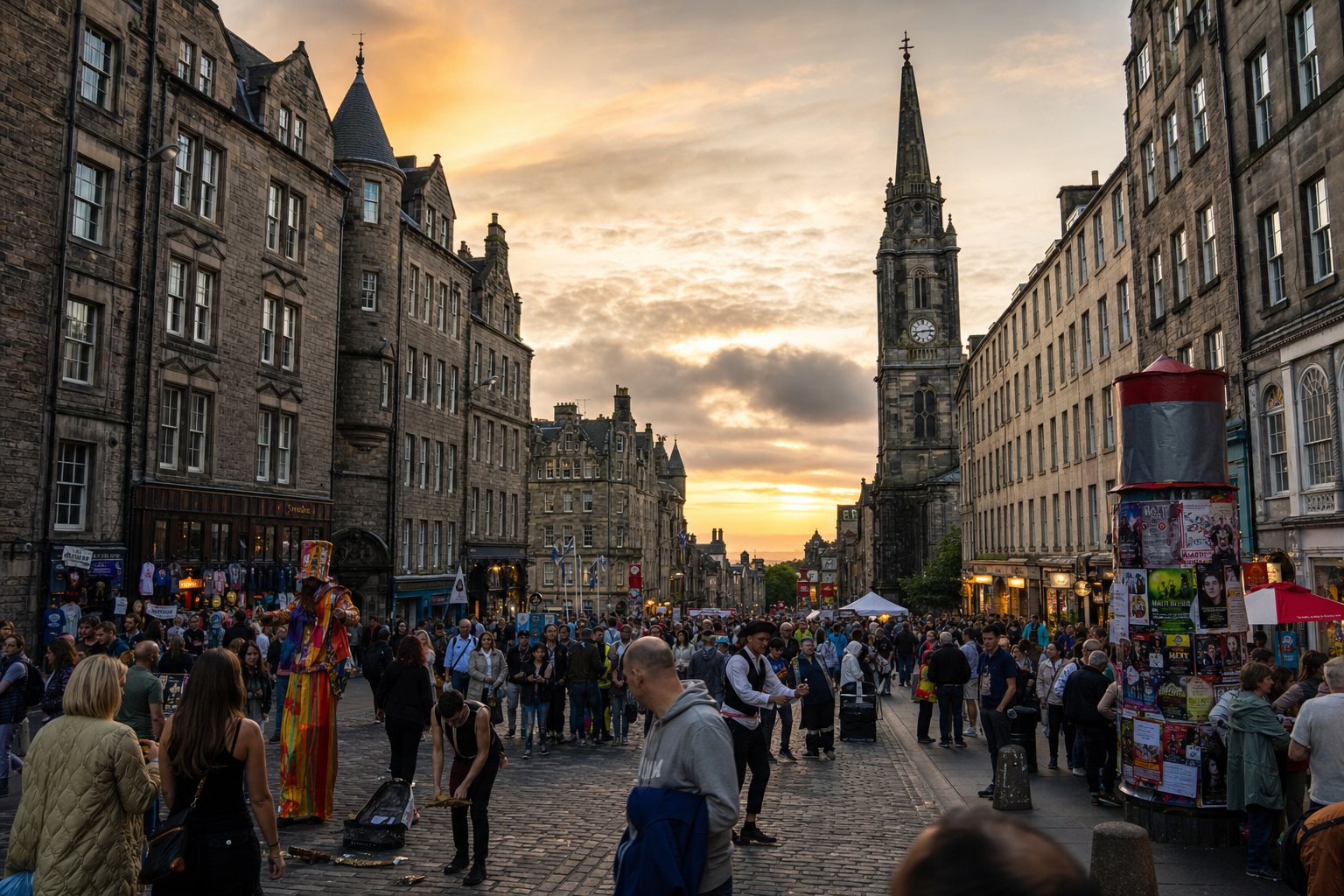
Expect Edinburgh to feel buzzing, crowded, and slightly chaotic in the best way. The Royal Mile and surrounding Old Town streets become a corridor of flyer teams, street performers, pop-up bars, and impromptu queues for buzzy shows. Comedy dominates mainstream attention, but the official programme spans theatre, dance, physical comedy, children's shows, spoken word, cabaret, and multimedia experiments. Show lengths typically run 50–70 minutes, which makes it feasible to stack three or four performances into a single day if you plan intervals carefully.
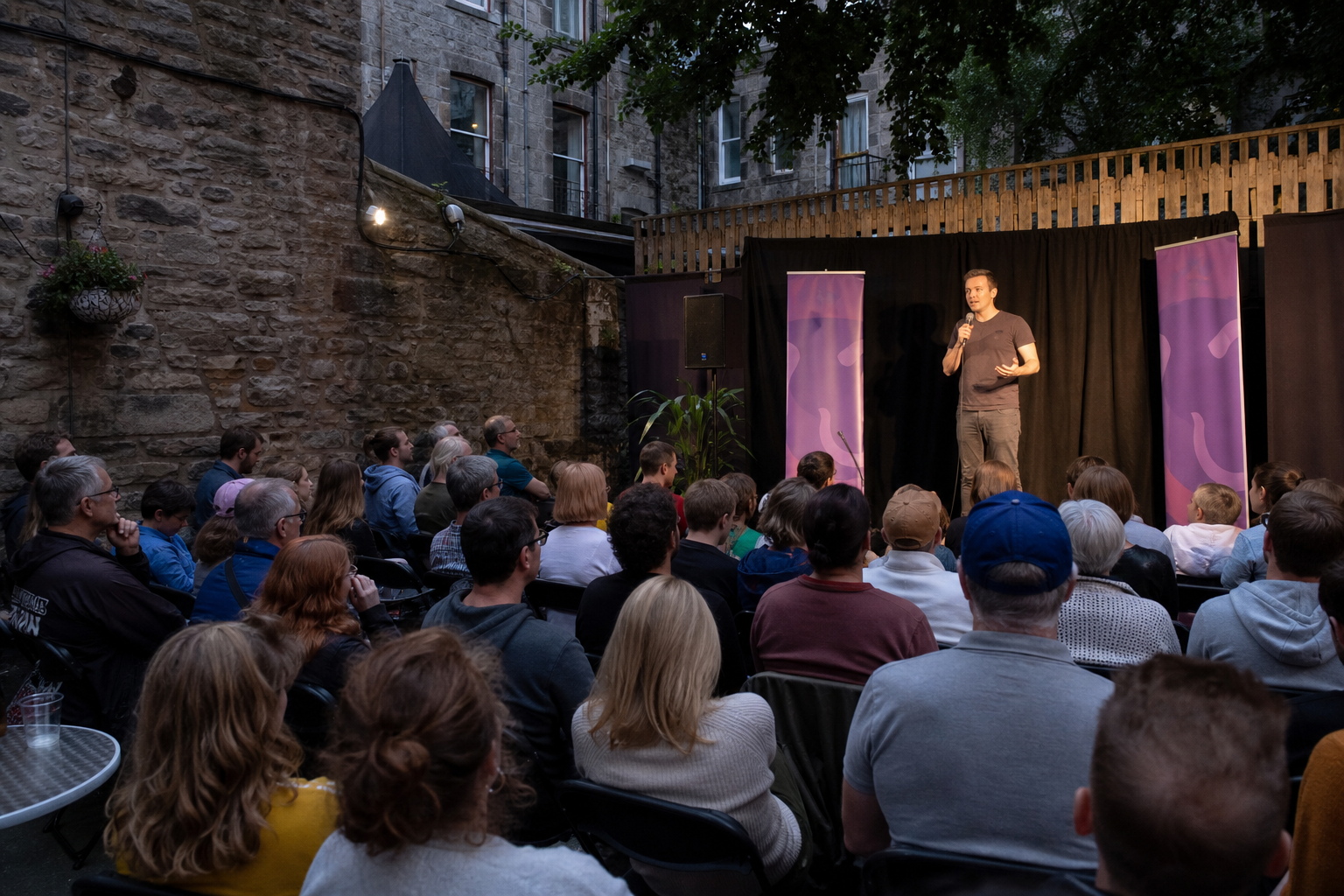
Venues range from purpose-built theatres like Pleasance and Underbelly complexes to church halls, university rooms, and pub back rooms with twenty seats. The venue map is part of the adventure: you might watch a sold-out clown show under a circus tent in Bristo Square, then walk ten minutes to a heartbreaking drama in a New Town basement. Accessibility varies widely — always check venue listings for step-free access if mobility is a concern.
Weather is genuinely Scottish. August can bring sunny evenings perfect for outdoor pint gardens, but rain and wind appear without apology. Pack a waterproof layer and comfortable shoes for cobblestones and hills. Daylight lasts late, so it is easy to lose track of time between a 5 p.m. show and a midnight cabaret. Food options explode during the festival: from quick haggis bonbons to sit-down tasting menus, but reservations for popular restaurants should be made weeks ahead.
Audiences are unusually international. You will hear accents from every continent in queue chatter, and many shows explicitly target tourists with fast-paced, low-context comedy. Others assume familiarity with UK politics or Scots culture — read blurbs carefully. Free shows (often called PBH — Pay What You Want) are a brilliant entry point, though performers appreciate cash or contactless tips at the end.
Edinburgh Fringe 2026 dates and key planning windows
The Edinburgh Festival Fringe typically runs for about 25 days in August, overlapping with the Edinburgh International Festival and the Military Tattoo. Confirm exact dates on edfringe.com when tickets release, but plan accommodation and travel around the windows below.
Preview week
- Dates (2026)
- Early August
- What happens
- Soft launch shows, smaller crowds, good for cheap previews.
Opening weekend
- Dates (2026)
- Fri 7 – Sun 9 Aug
- What happens
- Energy spikes; many companies open their runs.
Peak fortnight
- Dates (2026)
- Mon 10 – Sun 23 Aug
- What happens
- Busiest streets, hardest hotel availability, most buzz.
Final weekend
- Dates (2026)
- Fri 28 – Mon 31 Aug
- What happens
- Last-chance shows, awards chatter, heavy departures.
Bank Holiday overlap
- Dates (2026)
- Mon 31 Aug
- What happens
- UK visitors extend trips; trains and roads busy southbound.
| Period | Dates (2026) | What happens |
|---|---|---|
| Preview week | Early August | Soft launch shows, smaller crowds, good for cheap previews. |
| Opening weekend | Fri 7 – Sun 9 Aug | Energy spikes; many companies open their runs. |
| Peak fortnight | Mon 10 – Sun 23 Aug | Busiest streets, hardest hotel availability, most buzz. |
| Final weekend | Fri 28 – Mon 31 Aug | Last-chance shows, awards chatter, heavy departures. |
| Bank Holiday overlap | Mon 31 Aug | UK visitors extend trips; trains and roads busy southbound. |
Must-know venues and neighbourhoods
You do not need to see every venue — but knowing the main clusters saves hours of backtracking. Most first-timers rotate between these hubs:
- Royal Mile & Cowgate — street energy, pop-up venues, late-night bars.
- Pleasance — university campus hub with big-name comedy and theatre.
- Underbelly, Bristo Square — circus tents, cabaret, festival buzz.
- Assembly Rooms, George Street — polished programmes and central location.
- New Town & Princes Street — quieter stays, quick walks to venues.
Getting to Edinburgh: flights, trains, and local transport
Edinburgh Airport (EDI) sits roughly 20 minutes from the city centre by tram or Airlink bus, with year-round links from London, Dublin, Amsterdam, Paris, and major European hubs. During August, fares rise sharply — book flights early and compare flying into Glasgow (GLA) plus a 45-minute train if Edinburgh prices spike. Waverley Station is the main rail hub, with direct services from London King's Cross in about four and a half hours on LNER, plus CrossCountry and TransPennine routes from across Britain.
Within Edinburgh, walking is often fastest in the Old and New Towns, but festival crowds make buses and trams valuable. Lothian Buses and Edinburgh Trams accept contactless payment; day tickets can pay off if you are venue-hopping across the city. Taxis and rideshare are plentiful though slow during peak evening exodus. Cycling is viable if you are comfortable with hills and tram tracks — Just Eat Cycles offers hire points.
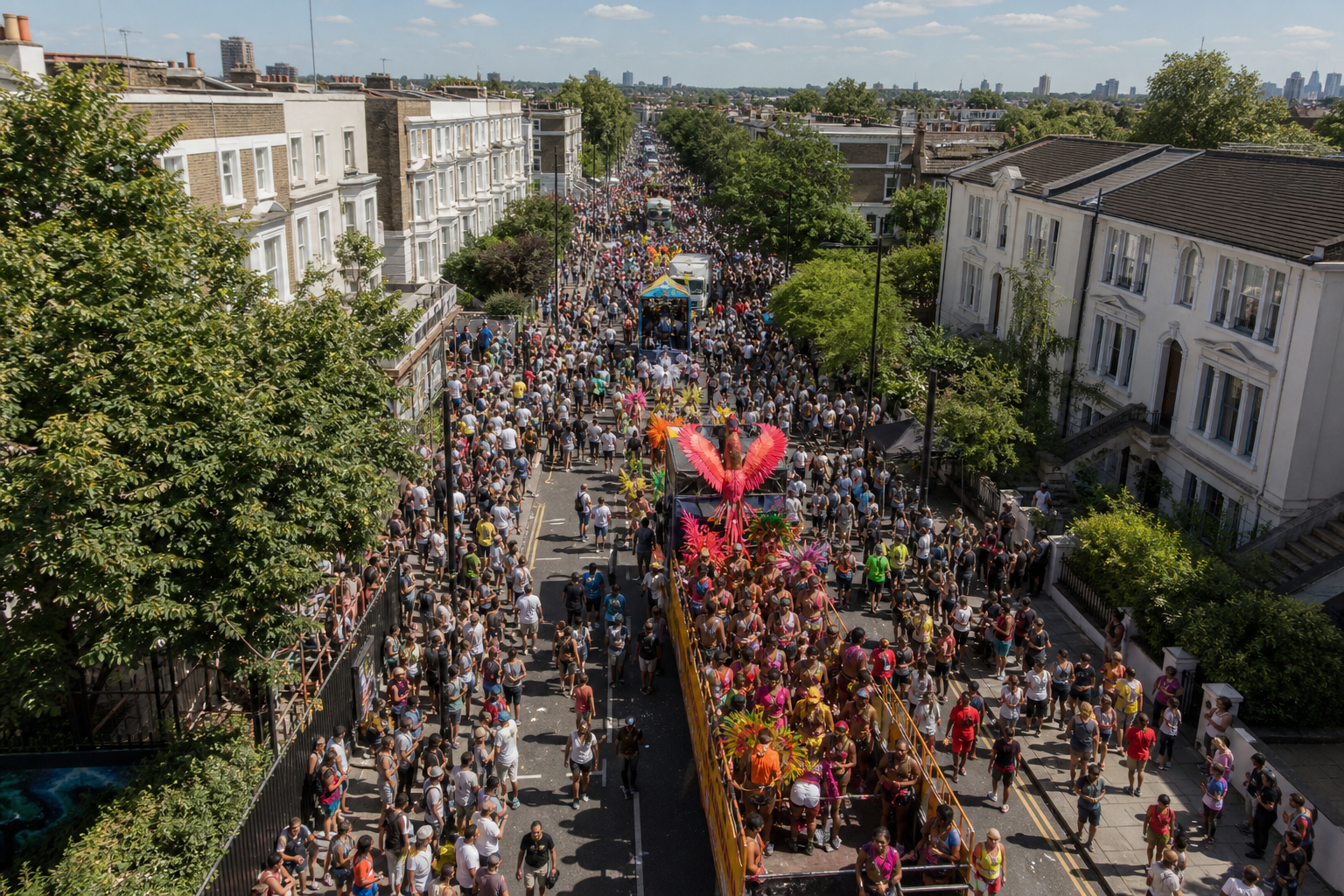
If you are combining the Fringe with Notting Hill Carnival or other UK events, rail planners like Trainline or National Rail are essential. August bank holiday weekend creates a predictable crush of travellers moving between Scotland and London.
- Download offline maps for Edinburgh Old Town — mobile signal drops in stone closes and basement venues.
- Book airport tram or bus tickets in advance during peak August weekends.
- Arrive at venues 20–30 minutes before start; latecomers are often refused entry.
- Use the official Fringe app for real-time venue changes and ticket availability.
- Consider staying near a tram stop if your venue list spans multiple neighbourhoods.
Where to stay: neighbourhoods, budgets, and booking strategy
Accommodation is the hardest part of Fringe planning. Central Old Town and New Town hotels command premium rates and sell out by spring for peak weeks. Realistic alternatives include Leith (lively food scene, tram to centre), Stockbridge (village feel, walkable to many venues), Bruntsfield and Morningside (residential, bus links), or even Glasgow with a daily train if you are budget-conscious and do not mind an hour each way.
Airbnb and serviced apartments work well for groups splitting costs, but check licensing rules and festival noise policies. University halls sometimes release student rooms during vacation — watch for King's Buildings or Pollock Halls listings. Hostels around Cowgate and the Royal Mile fill with performers; book beds early if you want social atmosphere on a budget.
Whatever you choose, prioritize proximity to your anchor venues over postcard views. A 15-minute walk saves more energy than a cheap room requiring two buses after midnight. Refundable rates are worth paying extra for — show schedules change when reviews land.
Mobile data and UK eSIM tips for festival visitors
Reliable mobile data is not a luxury at the Fringe — it is how you buy last-minute tickets, navigate rain-soaked closes, split rides with friends, and read review roundups between shows. Venue Wi-Fi is inconsistent, and public networks congest when thousands of people queue on the Royal Mile simultaneously. International roaming from US, Canadian, or Australian carriers can cost $10–$15 per day; a prepaid UK or Europe travel eSIM typically delivers 5–20 GB for a fraction of that total.
Install your eSIM on home Wi-Fi before flying, label the line clearly in phone settings, and disable data roaming on your home SIM. After landing at EDI, confirm mobile data routes through the travel line. Keep screenshots of tickets and QR codes offline — Apple Wallet and Google Wallet help, but battery drain is real on long festival days. A small power bank is as important as data.
If you are visiting from the EU, check whether your home plan still includes UK roaming post-Brexit — many do not. If you are touring Scotland then London for Carnival, a multi-country Europe eSIM or separate UK plan may be cheaper than daily passes.
- Confirm your phone is unlocked and eSIM-compatible.
- Compare UK eSIM plans before departure — fixed data beats daily roaming.
- Download the Fringe app, Citymapper, and offline Google Maps.
- Screenshot tickets and hotel confirmations.
- Carry a power bank; cold weather drains batteries faster.
Practical tips: tickets, budgets, and festival etiquette
Ticket strategy
Pre-book 3–5 must-see shows, then leave gaps for discoveries. Free PBH shows reward early queues; paid shows often release day tickets at venue box offices at noon.
Budget planning
Daily costs vary wildly: £30–£80 in show tickets alone, plus food, drinks, and transport. Set a daily cap and use contactless budgeting apps to avoid post-festival shock.
Reviews and buzz
Follow The Scotsman, Chortle, and Broadway Baby for daily roundups. A four-star surge can sell out remaining dates overnight — act fast if a show clicks for you.
Accessibility
Use the Fringe access booking service for audio-described, BSL, and relaxed performances. Not all venues have lifts — verify before buying.
Safety and crowds
Pickpockets target dense Royal Mile crowds. Wear bags in front, avoid unsecured back pockets, and agree meeting points with friends when signal fails.
Combine with other UK trips
Many international visitors pair Edinburgh in early–mid August with London's Notting Hill Carnival on the bank holiday weekend — plan rail or flights before prices spike.